
How to Diagnose and Fix Noisy Washing Machine Problems:
Is your washing machine making strange noises that wake up the whole house during late-night laundry sessions? You’re not alone – noisy washing machines are one of the most common household headaches that drive homeowners crazy.
This guide is for anyone dealing with a loud, rattling, or grinding washing machine who wants to fix the problem without immediately calling for help. Whether you own a Samsung, LG, Whirlpool, Bosch, Panasonic, IFB, or Godrej model, these troubleshooting steps work across all major brands.
We’ll walk you through identifying what type of noise your machine is making and where it’s coming from. You’ll learn simple DIY fixes you can try at home, plus clear signs that tell you when it’s time to contact a professional washing machine repair service in Bangalore or your local area.
Stop letting that noisy washer disrupt your peace – let’s get it running quietly again.
Identify Common Types of Washing Machine Noises
Distinguish between normal operational sounds and problematic noises
Your washing machine creates various sounds during normal operation that you shouldn’t worry about. Water filling the tub produces a gentle whooshing sound, while the motor’s hum during agitation and spin cycles is completely normal. You’ll also hear water draining and the gentle clicking of cycle transitions.
Problematic noises stand out because they’re either unusually loud, harsh, or completely new sounds your machine hasn’t made before. These concerning sounds typically interrupt the machine’s normal rhythm and often get progressively worse over time. If you notice your neighbors can hear your washing machine through walls, or if the sounds make you stop what you’re doing to listen, it’s time to investigate.
Recognize grinding, squealing, and banging sounds
Grinding noises usually signal worn-out bearings or a damaged drive system. This metallic scraping sound often occurs during the spin cycle and suggests internal components are wearing against each other without proper lubrication.
Squealing sounds typically point to belt problems. A loose, worn, or misaligned drive belt creates high-pitched squealing, especially when the drum starts spinning. This noise might come and go initially but tends to become constant as the belt deteriorates.
Banging or thumping sounds often indicate an unbalanced load or loose drum components. If clothes bunch up on one side during spinning, the drum rocks violently, creating loud banging against the machine’s frame. Loose shock absorbers or worn suspension springs can also cause similar symptoms.
Understand clicking, rattling, and humming noises
Clicking sounds during cycle changes are normal, but excessive clicking throughout the wash might indicate timer or control mechanism issues. Rapid clicking often suggests electrical problems with the motor or control board.
Rattling noises usually come from loose objects – either small items stuck between the drum and tub, or loose external components like screws or panels. Check pockets for coins, buttons, or small items that might have escaped into the machine’s interior.
Unusual humming or buzzing sounds, different from the normal motor hum, often indicate electrical issues. A struggling motor, faulty pump, or water level sensor problems can create these sounds. If the humming gets louder or changes pitch, the motor might be overworking.
Determine noise patterns during different wash cycles
Pay attention to when noises occur during wash cycles. Fill cycle noises point to water inlet valve problems, while agitation sounds suggest transmission or motor issues. Spin cycle noises often relate to bearings, belts, or balance problems.
Some noises appear only during specific cycles – delicate wash might reveal bearing issues that heavy-duty cycles mask, while spin-only cycles help isolate drive system problems. Document which cycles produce which sounds to help professional technicians diagnose issues more efficiently.
Temperature settings can also affect noise patterns. Hot water cycles might reveal expansion-related problems, while cold cycles could highlight different mechanical issues. This information proves valuable when seeking washing machine repair service in Bangalore or scheduling washing machine service near me.
Locate the Source of Washing Machine Noise
Check for loose items in pockets or drum
The most common culprit behind washing machine noise is loose items rattling around in the drum. Before diving into complex diagnostics, empty your pockets completely and check inside the drum for any forgotten items. Coins are notorious noise makers – they create a distinct metallic clanking that can be heard throughout the wash cycle. Pull out all clothes and run your hand along the drum’s perimeter, feeling for any small objects that might be stuck.
Check the rubber door seal carefully, as items often get trapped in its folds. Hairpins, buttons that have fallen off clothes, and even small toys can wedge themselves in unexpected places. Remove the agitator (if your machine has one) to access areas underneath where debris commonly accumulates.
Inspect the machine’s level and stability
An unlevel washing machine creates vibrations that amplify into disturbing noises, especially during the spin cycle. Place a level on top of your machine to check if it’s sitting evenly. Most washing machines have adjustable feet that can be turned to level the unit properly.
Check that your machine sits on a solid, flat surface. Wooden floors or raised platforms can amplify vibrations significantly. The machine should not rock when you push it gently from different angles. If it does, adjust the leveling feet until all four corners make solid contact with the floor.
Examine the feet themselves for wear or damage. Cracked or missing feet can cause the machine to vibrate excessively. Some machines have locking nuts on the feet – make sure these are tightened securely after making adjustments.
Examine external connections and hoses
Loose or damaged hoses create rattling and knocking sounds as water flows through them during wash cycles. Check both the hot and cold water supply hoses where they connect to your machine and the wall outlets. These connections should be hand-tight plus a quarter turn with pliers – over-tightening can damage the fittings.
Look for kinks, cracks, or bulges in the hoses that might cause water flow restrictions or unusual sounds. The drain hose should be properly secured and not bouncing against the wall or floor during operation. If your machine connects to a utility sink, ensure the hose end isn’t banging against the sink walls.
Inspect the power cord and ensure it’s not caught under the machine or creating tension that could cause movement-related noise.
Listen for internal component sounds
Different internal components produce distinct sound patterns that help identify specific problems. During the fill cycle, listen for unusual gurgling or grinding from the water inlet valve. A high-pitched whining often indicates bearing problems, while rhythmic thumping suggests drum or suspension issues.
Pay attention to when specific noises occur during the wash cycle. Grinding sounds during agitation might indicate transmission problems, while squealing during spin cycles often points to belt or pulley issues. Loud banging during spin usually means unbalanced loads or worn shock absorbers.
For professional washing machine repair service in Bangalore, experienced technicians can quickly identify these internal component sounds and provide accurate diagnoses when DIY troubleshooting reaches its limits.
Diagnose Specific Noise-Related Problems
Identify Worn or Damaged Drum Bearings
When drum bearings start failing, your washing machine produces a distinct grinding or rumbling sound during the spin cycle. These bearings support the drum’s rotation, and when they wear out, the noise becomes progressively worse over time. You’ll notice the sound is most prominent when the machine is spinning at high speeds.
To check for bearing problems, manually rotate the drum when the machine is empty and unplugged. If you hear grinding sounds or feel resistance, the bearings likely need replacement. Another telltale sign is water leakage from the bottom of the machine, as worn seals often accompany bearing failure. The drum may also wobble excessively during operation, creating additional noise and vibration throughout your laundry room.
Detect Faulty Drive Belt Issues
A loose, worn, or damaged drive belt creates squealing, squeaking, or slapping sounds during operation. The belt connects the motor to the drum, and when it stretches or develops cracks, it slips against the pulleys, producing these characteristic noises.
Check the belt by accessing the back panel of your machine. Look for signs of wear like fraying edges, cracks, or glazing on the surface. A properly tensioned belt should have slight give when pressed but shouldn’t be loose enough to slip off the pulleys easily. If the belt appears stretched or damaged, replacement is necessary to restore quiet operation.
Spot Problems with the Motor or Pump
Motor issues typically manifest as humming, buzzing, or grinding sounds, especially when the machine attempts to start a cycle. A failing motor may struggle to turn the drum, creating strain-related noises. Listen carefully during different cycle phases to pinpoint when the noise occurs.
Pump problems usually generate gurgling, rattling, or grinding sounds during the drain cycle. The drain pump removes water from the tub, and debris or wear can cause it to work harder and create noise. Check for clogs in the pump filter or drain hose, as blockages force the pump to work overtime, potentially leading to premature failure.
Recognize Agitator or Impeller Malfunctions
Top-loading machines with agitators may develop loose or worn components that create banging, clicking, or grinding sounds during the wash cycle. The agitator should move smoothly without excessive play or resistance. Grab the agitator firmly and try to lift it slightly – excessive movement indicates worn mounting hardware.
Front-loading machines use impellers or wash plates that can also develop problems. Loose impeller blades or damaged mounting points create rhythmic tapping or scraping sounds as they contact the drum walls during rotation.
Check for Loose or Broken Suspension Components
Washing machines rely on suspension systems to absorb vibrations and maintain drum stability. When springs, shock absorbers, or suspension rods fail, the machine produces loud banging, thumping, or excessive vibration during spin cycles.
Inspect suspension components by examining the space between the outer tub and cabinet. Look for broken springs, leaking shock absorbers, or disconnected suspension rods. The drum should sit centered in the cabinet without touching the sides. If suspension components are damaged, the drum may shift during operation, creating contact noise and potentially damaging other parts.
Professional washing machine repair service in Bangalore technicians can accurately diagnose these complex mechanical issues and recommend appropriate solutions based on your specific machine model and symptoms.
Perform Basic DIY Noise Fixes
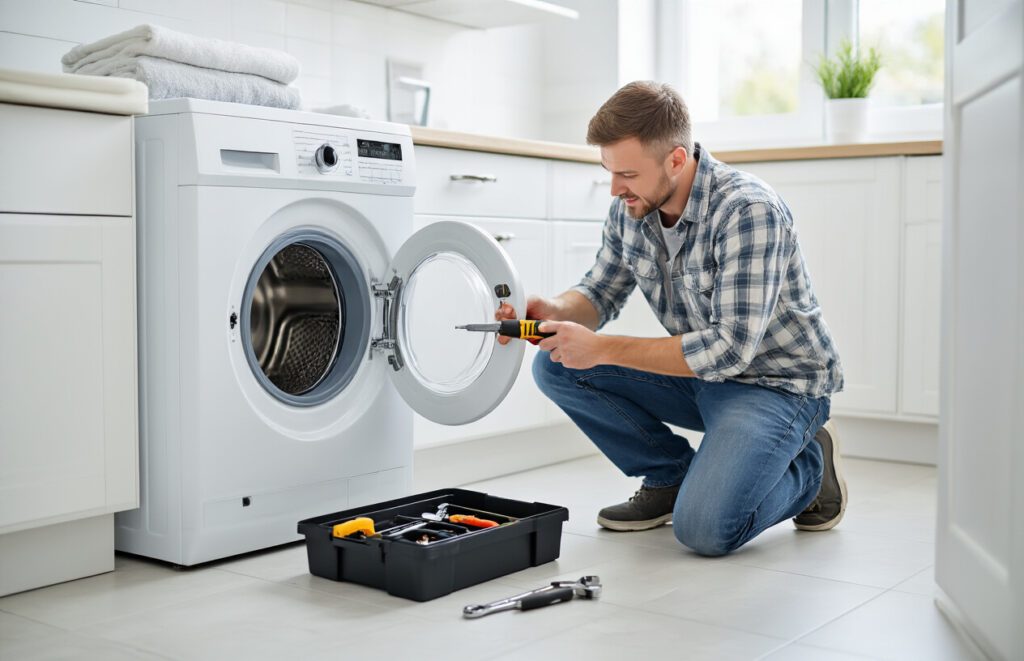
Balance and level your washing machine properly
An unbalanced washing machine creates excessive vibration and noise during spin cycles. Start by checking if your machine sits level on all four feet. Use a bubble level on top of the washer to identify any tilting. Most washing machines have adjustable front feet – turn them clockwise to lower or counterclockwise to raise each corner.
For machines with self-leveling rear legs, gently tip the washer forward about 4 inches, then lower it back down. The rear legs should automatically adjust. Test the stability by pushing each corner of the machine – it shouldn’t rock or move.
Check that your washer sits on a solid, level surface. Wooden floors sometimes require additional support to prevent movement. Consider installing anti-vibration pads under each foot to reduce noise transmission to the floor below.
Remove foreign objects from the drum and filter
Foreign objects cause rattling, grinding, or clicking sounds during wash cycles. Common culprits include coins, keys, buttons, hairpins, and small toys that fall from pockets.
Checking the drum:
- Inspect the drum interior for visible objects
- Run your hand around the drum’s holes to feel for trapped items
- Use a flashlight to look between the inner and outer drums
- Remove any objects with needle-nose pliers or tweezers
Cleaning the filter:
- Locate the drain filter (usually behind a panel at the machine’s front bottom)
- Place towels around the area and have a shallow pan ready
- Unscrew the filter counterclockwise
- Remove debris, lint, and objects from the filter housing
- Rinse the filter thoroughly before reinstalling
Clean the filter every 1-2 months to prevent blockages that can cause unusual noises and drainage problems.
Tighten loose bolts and connections
Vibrations from regular use can loosen various bolts and connections throughout your washing machine. This creates rattling or banging sounds that worsen over time.
Key areas to check:
- Drum mounting bolts: Access through the top panel (if removable) to check suspension system bolts
- Control panel screws: Tighten any loose screws around the control area
- Back panel connections: Check water inlet valve connections and drain hose clamps
- Base mounting: Ensure the motor and transmission mounts remain secure
Use appropriate tools for each connection type – typically Phillips head screwdrivers, socket wrenches, or adjustable pliers. Don’t overtighten, as this can strip threads or crack plastic components. Snug connections should stop movement without excessive force.
Replace worn drive belts safely
Drive belt problems create squealing, grinding, or slapping sounds during operation. Before attempting belt replacement, disconnect power and water supplies to your washing machine.
Belt inspection signs:
- Cracking or fraying along the belt edges
- Stretching that prevents proper tension
- Glazing (shiny, hardened surface) from slipping
- Missing chunks or severe wear spots
Replacement process:
- Remove the back or front panel (varies by model)
- Take a photo of the belt routing before removal
- Release tension by moving the motor or tensioner pulley
- Remove the old belt and clean pulley surfaces
- Install the new belt following your reference photo
- Adjust tension – the belt should deflect about 1/2 inch when pressed firmly
Different washing machine brands like Samsung, LG, Whirlpool, or Bosch may have varying belt configurations. Consult your specific model’s manual for exact procedures. If you’re uncomfortable with this repair, professional washing machine repair services in Bangalore can handle belt replacement safely and efficiently.
Know When to Call Professional Repair Services
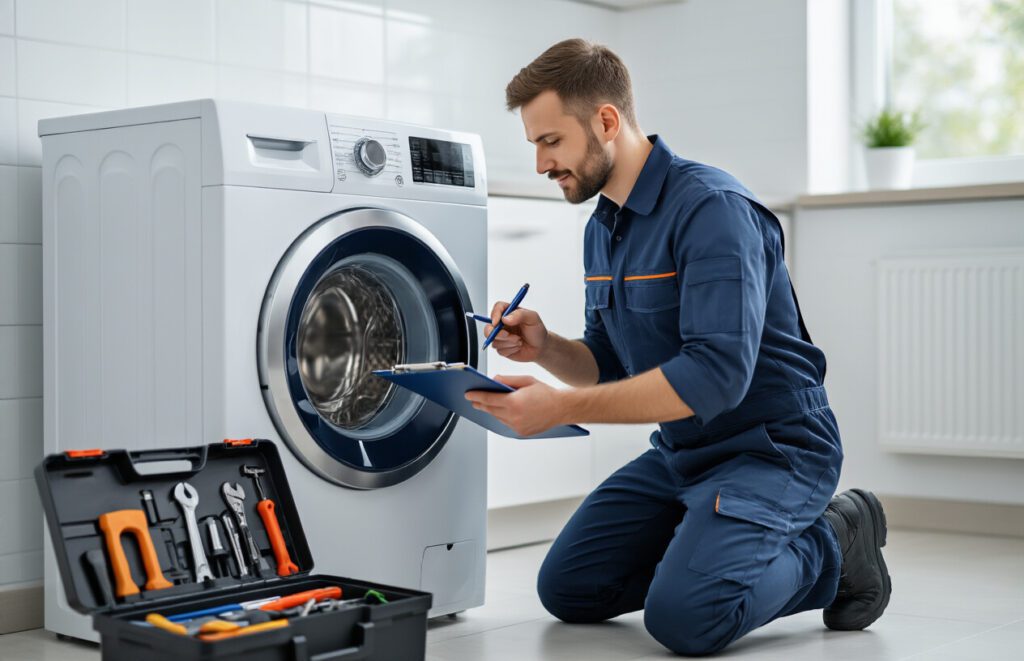
Recognize complex internal component failures
Several warning signs point to serious internal damage that requires professional intervention. When your washing machine produces grinding metal-on-metal sounds, this often indicates worn bearings or a damaged drum spider assembly. These components require specialized tools and expertise to replace safely.
Motor-related issues present another clear case for professional washing machine repair service in Bangalore. If you hear loud humming without drum movement, electrical burning smells, or the machine repeatedly trips circuit breakers, the motor or control board likely needs expert diagnosis. These problems involve complex electrical systems that can be dangerous for untrained individuals.
Transmission failures create distinctive symptoms like the drum spinning in only one direction or making severe grinding noises during agitation. Modern front-loading washers have intricate suspension systems that, when damaged, cause violent shaking that can’t be fixed with simple adjustments.
Water leaks from internal seals, particularly in front-loading models, often require complete disassembly to access. Professional technicians have the experience to identify whether the issue stems from door seals, internal hoses, or pump assemblies.
Understand warranty implications of DIY repairs
Manufacturer warranties typically void coverage when unauthorized repairs occur. Most major brands like Samsung, LG, Whirlpool, Godrej, IFB, Bosch, and Panasonic include specific clauses about professional service requirements. Opening the machine’s housing or replacing internal components yourself can eliminate warranty protection entirely.
Extended warranty plans through retailers or third-party providers also contain strict professional service requirements. Before attempting any repair, check your warranty documentation and contact an authorized washing machine service centre near me to understand coverage options.
Some manufacturers offer diagnostic support over the phone, helping you determine if professional service is necessary. This guidance protects your warranty while ensuring proper problem identification.
Identify safety risks with electrical or motor issues
Electrical problems pose serious safety hazards that demand professional attention. Water and electricity create dangerous combinations, especially when internal wiring becomes exposed during amateur repairs. Professional washing machine repair near me services have proper safety equipment and training to handle these risks.
Motor issues often involve high-voltage components that remain energized even when the machine is unplugged. Capacitors store electrical charges that can deliver harmful shocks hours after disconnection. Trained technicians understand proper discharge procedures and safety protocols.
Gas connections in some combination washer-dryer units add another layer of complexity requiring certified professionals. Improper handling can lead to gas leaks or carbon monoxide exposure.
When multiple symptoms appear simultaneously – strange noises, electrical issues, and performance problems – the interconnected nature of modern washing machine systems makes professional diagnosis essential for safe, effective repairs.
Fixing a noisy washing machine doesn’t have to be a mystery anymore. You’ve learned how to identify different types of sounds your machine makes, track down where they’re coming from, and figure out what’s actually causing the problem. Many of these issues can be solved with simple DIY fixes like redistributing clothes, tightening loose bolts, or cleaning out debris from the drum.
Remember that some problems need professional attention, especially when it comes to internal parts like bearings or motor issues. Don’t ignore persistent loud noises – they usually get worse over time and can lead to more expensive repairs. Take action early, start with the basics, and you’ll keep your washing machine running quietly for years to come.